Heritage
How a civilization 5,000 years old developed perfume formulas so sophisticated that modern chemists still struggle to fully replicate them.
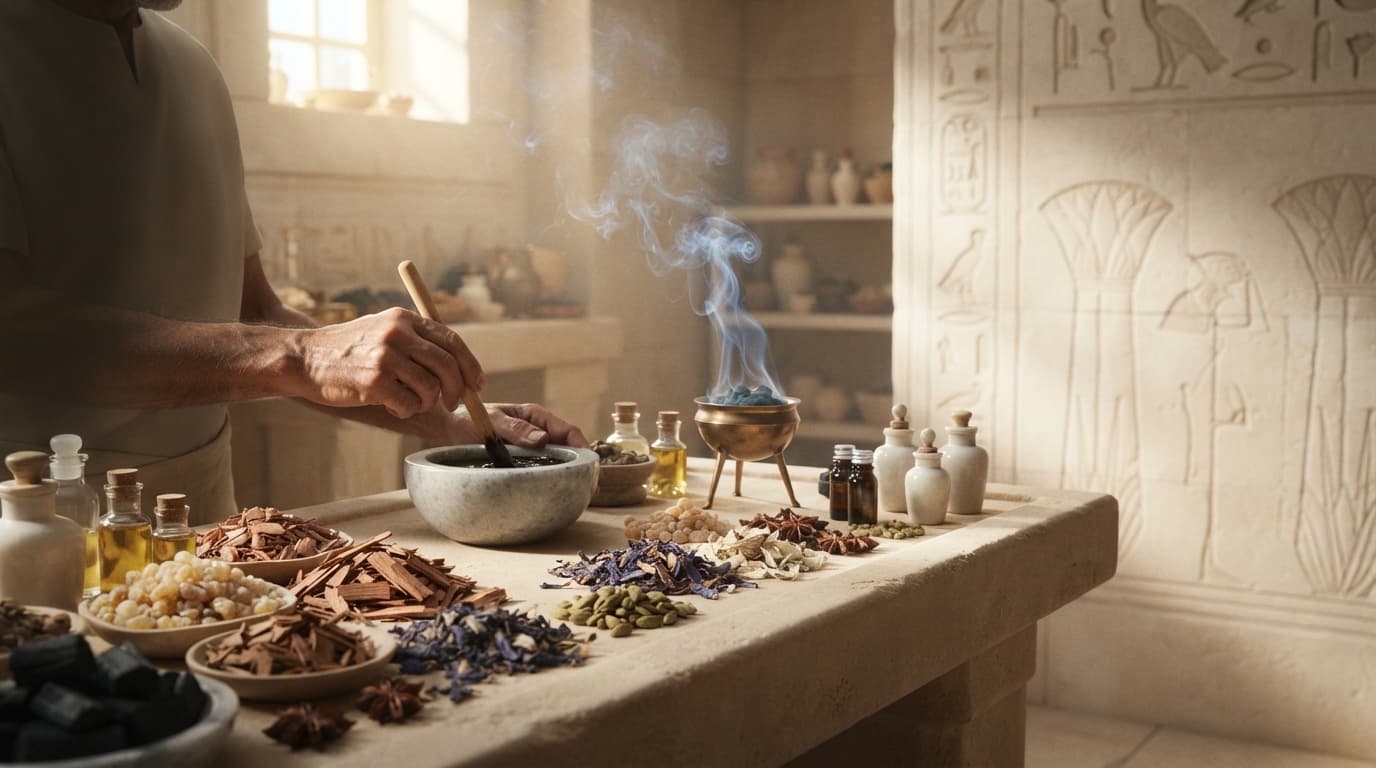
Long before the word chemistry existed, the priests of Egypt were practising it. In the temple laboratories at Edfu and Dendera, in rooms whose walls still carry the recipes carved into limestone, they macerated, decanted, filtered and aged. They kept records. They standardised. They failed, adjusted, and tried again. What they produced was not a pleasant smell for a pleasant afternoon; it was a technology of the sacred, and it was made with a rigour that would not look out of place in a modern laboratory.
Every perfumer since has faced the same difficulty: the beautiful part evaporates first. Citrus, herbs, the green top of a composition these are volatile molecules that lift, announce themselves, and vanish within the hour. The Egyptians solved this four thousand years before anyone could explain why the solution worked.
Their answer was fat. Rather than alcohol, which they did not have in any usable concentration, they built their perfumes on a base of balanite oil, moringa oil, or animal fat rendered to a pale, near-odourless cream. Aromatic material was pressed into this base and left, sometimes for months, in sealed alabaster vessels. The oil held the volatile molecules in suspension and released them slowly against the warmth of the skin.
A modern fixative does exactly this, with a mechanism we can now name. The Egyptians had no vocabulary for molecular weight or vapour pressure. They simply observed, over generations, that a perfume made this way lasted from dawn until well after dark, and one made carelessly did not.
The most famous Egyptian composition is kyphi, burned in the temples at nightfall and taken internally as a medicine. Several recipes survive from Edfu, from Philae, and in the accounts of Plutarch and Dioscorides, and no two agree. Depending on the source, it contains between ten and sixteen materials: raisins steeped in wine, honey, resins of frankincense and myrrh, mastic, juniper, calamus, cyperus, mint, cinnamon-like barks, and a quantity of aromatic wood.
The materials were not merely mixed. They were combined in a sequence, over days, each stage given time to complete before the next began.
That sequence is what makes kyphi difficult to reproduce. The raisins were left in wine until they fermented. The resins were ground separately and worked with honey into a paste. Only then were the two brought together, and the whole left to mature. Reconstructions that combine everything at once produce something recognisably related and unmistakably inferior, flat where the original should be layered, sweet where it should be balsamic and dry.
When a sealed vessel from the tomb of Tutankhamun was opened in the 1920s, the contents still carried a detectable scent after three and a half thousand years. Chemical analysis of residues from that and later finds has confirmed a consistent picture: plant oils as carriers, high concentrations of resin, and traces of materials that had to be traded across enormous distances: cinnamon-like barks from Asia, and frankincense from Punt, which required a sea expedition to obtain.
The sophistication was not only in the formula but in the supply chain that fed it. Hatshepsut's expedition to Punt, recorded in relief at Deir el-Bahari, brought back living myrrh trees, roots wrapped in baskets, to be planted in temple gardens. A civilisation does not organise a naval expedition for a luxury it takes lightly.
The reason a perfumer reads these texts is not nostalgia. It is that the Egyptians were working with a constraint we have engineered our way out of, and that constraint made them better at something we are worse at.
With no alcohol to carry a composition, everything had to be built for the skin, at body temperature, over hours. Structure could not be faked with a bright volatile opening. The materials themselves had to be worth living with, and the arrangement had to hold together as they unfolded.
At KHEM, every composition is tested first as an oil on skin, before it is ever assessed on a blotter. It is not a ceremonial gesture towards the past. It is the more demanding test, and it is the one the people who invented this craft would have recognised.
Continue Reading
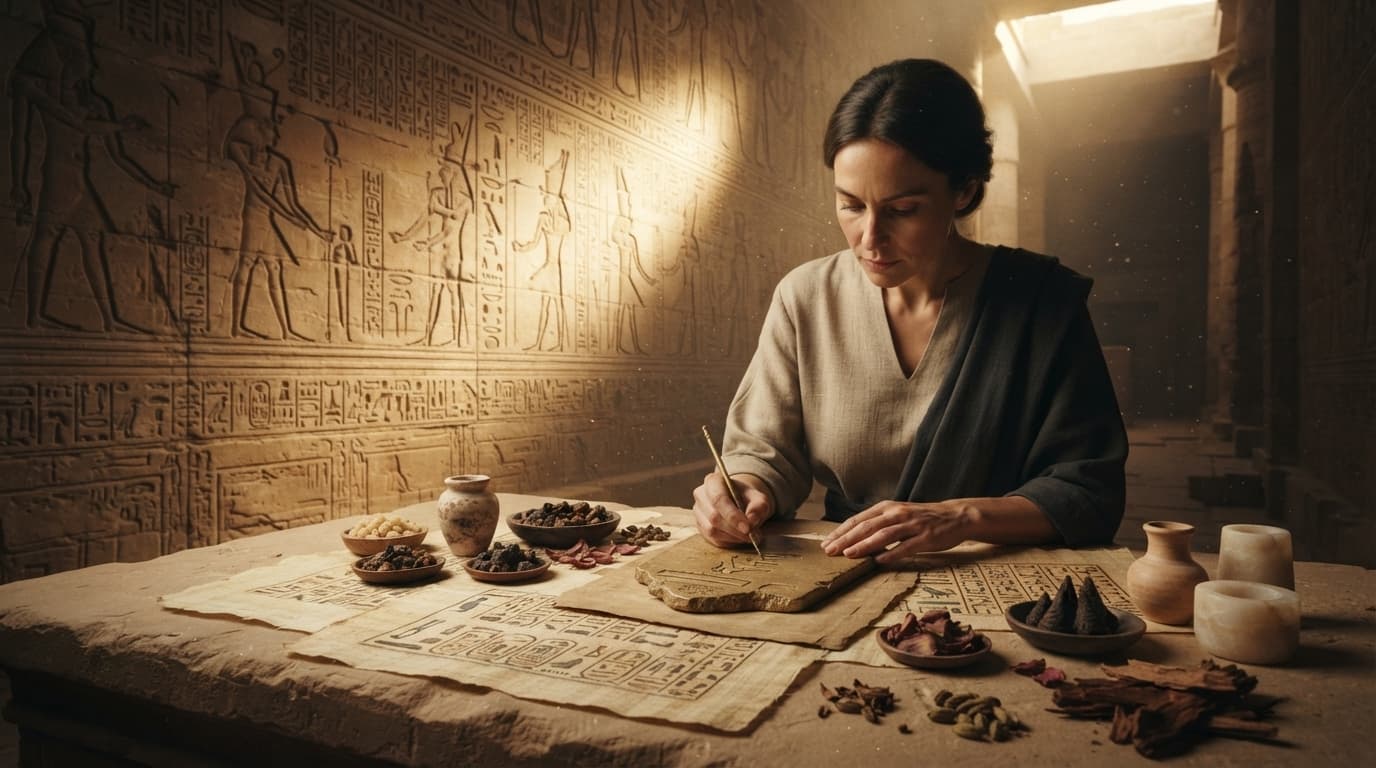
With the help of Egyptologist Dr. Amira Soltan, we decode the scent formulas carved into the walls of the Temple of Edfu.
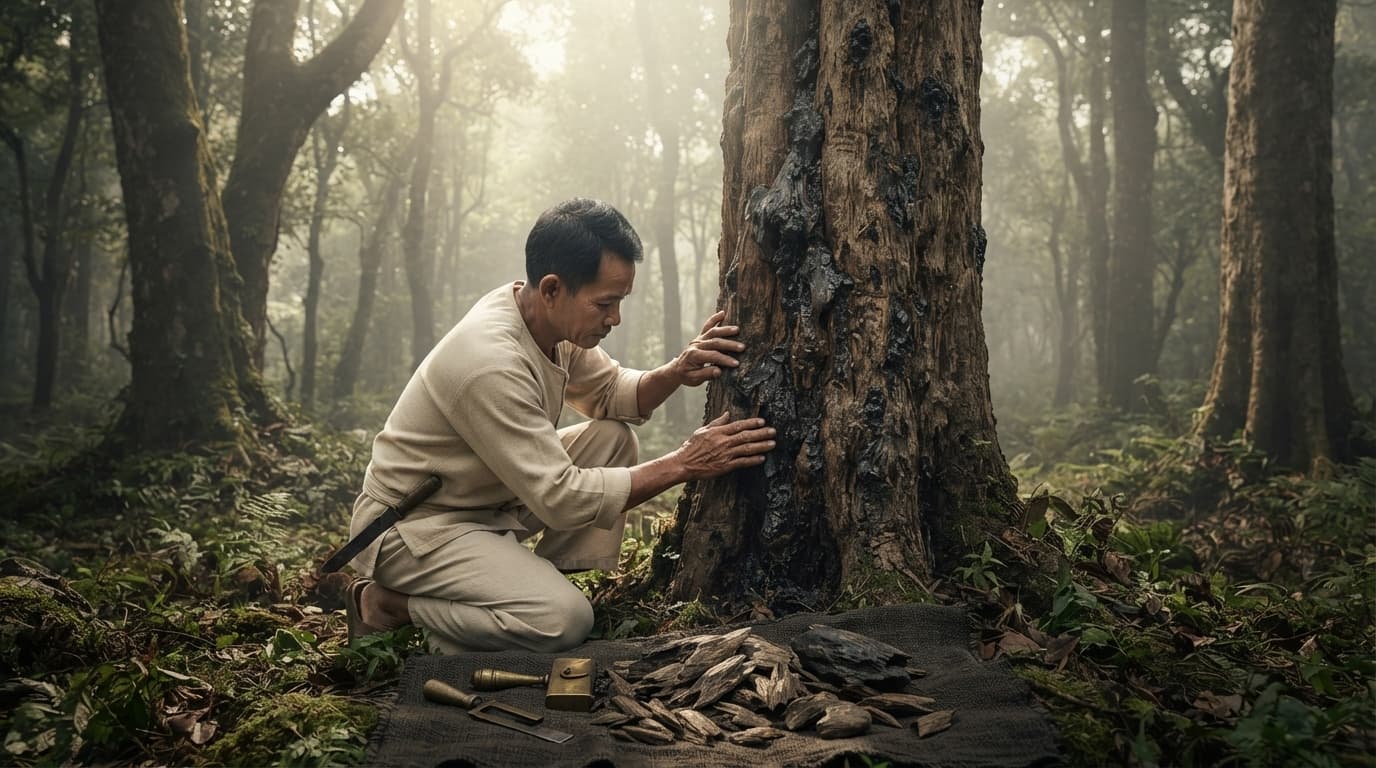
A journey through the agarwood forests of Laos and Cambodia, where the world's most precious aromatic wood is harvested with extraordinary care.
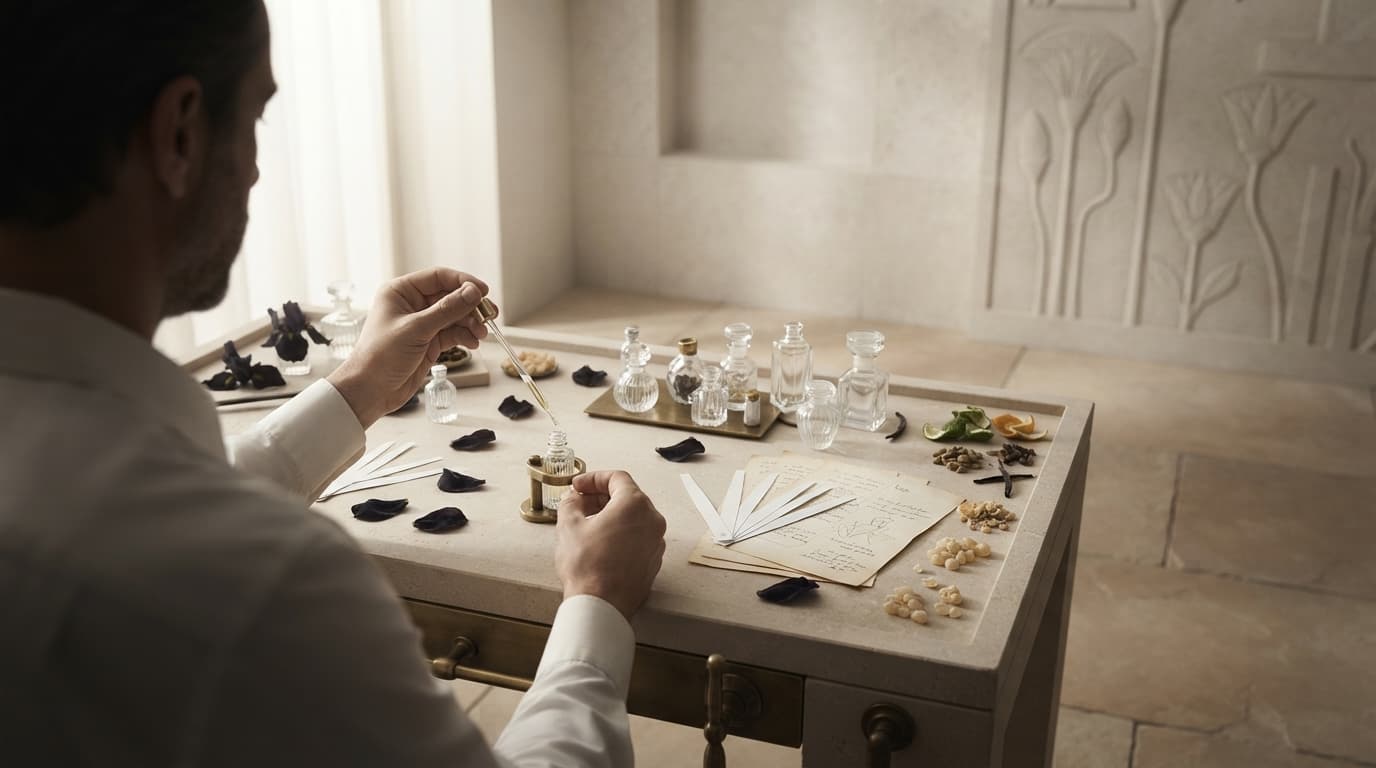
Master perfumer Mohamed Hassaan opens the doors of the KHEM atelier to share how our most complex fragrance took three years and 200 iterations to perfect.