Culture
In ancient Egypt, fragrance was never merely aesthetic. It was a spiritual practice, a daily ceremony of connection with the divine.
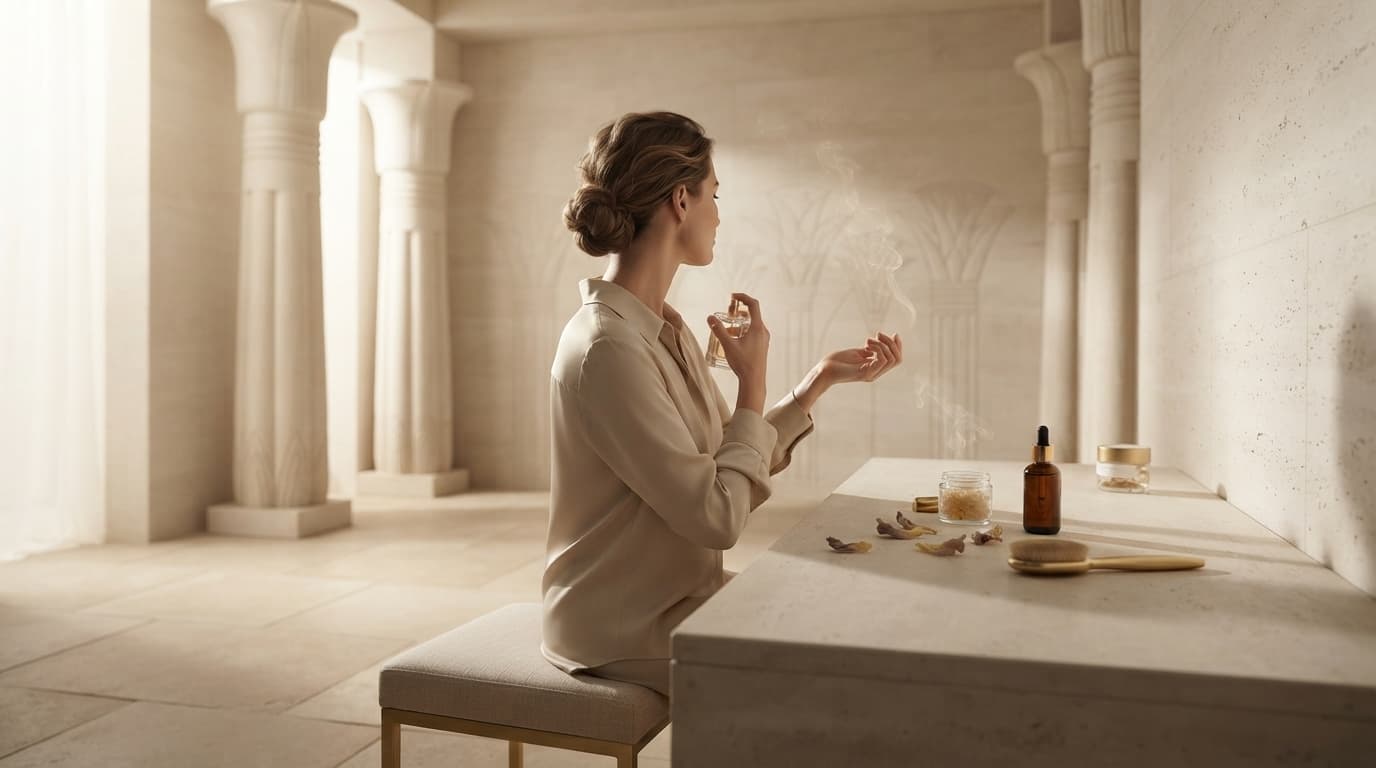
An Egyptian noblewoman did not apply perfume in the morning and forget about it. She began the day with it, in a sequence of acts that was closer to prayer than to grooming, and the sequence mattered as much as the substance.
Nothing was applied to unwashed skin. The morning began with water and natron, a naturally occurring mix of sodium carbonate and bicarbonate collected from the dry lake beds of Wadi El Natrun, the same material used in mummification.
This was not incidental. Cleanliness was a condition of approaching anything sacred, and perfume was sacred by definition; it was made in temples, by priests, from materials owned by gods. To put it on a body that had not been prepared was to misuse it.
The image is familiar from tomb painting: guests at a banquet with a pale cone balanced on the crown of the head. Egyptologists have argued for a century about whether these were literal objects or a pictorial convention for "this person is perfumed", and the evidence now points, cautiously, to both.
Where they were physical, they were made of fat impregnated with aromatic material the same fat-based technology that made Egyptian perfume last. Body heat softened the cone through the evening. The scent descended over the hair and shoulders continuously, for hours, rather than being applied once and left to fade.
The design is quietly brilliant. The wearer becomes the diffuser, and the fragrance is renewed by the warmth of the person wearing it.
Ritual application texts and grave goods point consistently to a small number of anointing points: the crown of the head, the forehead, behind each ear, the hollow of the throat, the inside of each wrist, and the soles of the feet.
Six of these are places where blood runs close to the surface and heat lifts the scent. The seventh is the feet, which have nothing to do with diffusion and everything to do with meaning a person who has been anointed at the feet walks on ground that has been made ready. Anointing was frequently the last act performed for the dead before burial, and it began at the feet and moved upward.
Perfume was not a consumer good. Production was a temple monopoly, the formulas were controlled, and the finest preparations were reserved for cult use for anointing statues of the gods each morning, dressing them, and presenting offerings.
What reached private hands did so as a gift, a payment, or a privilege of rank. Jars of unguent appear in tomb inventories alongside gold and lapis, listed by name and quantity, because they were treated as treasure and accounted for as treasure.
The ritual is gone. The instinct behind it is not, and it is worth naming precisely, because it is not the instinct most modern fragrance is sold on.
Egyptian perfume was not a projection of the self outward. It was a preparation of the self for something — for the day, for an obligation, for the presence of a god. It was applied deliberately, in silence, in a fixed order, and its purpose was to change the state of the person wearing it before anyone else encountered them.
That is a use for fragrance that survives any change in materials or fashion. The cone is not coming back. The two quiet minutes before the day begins are available to anyone.
Continue Reading
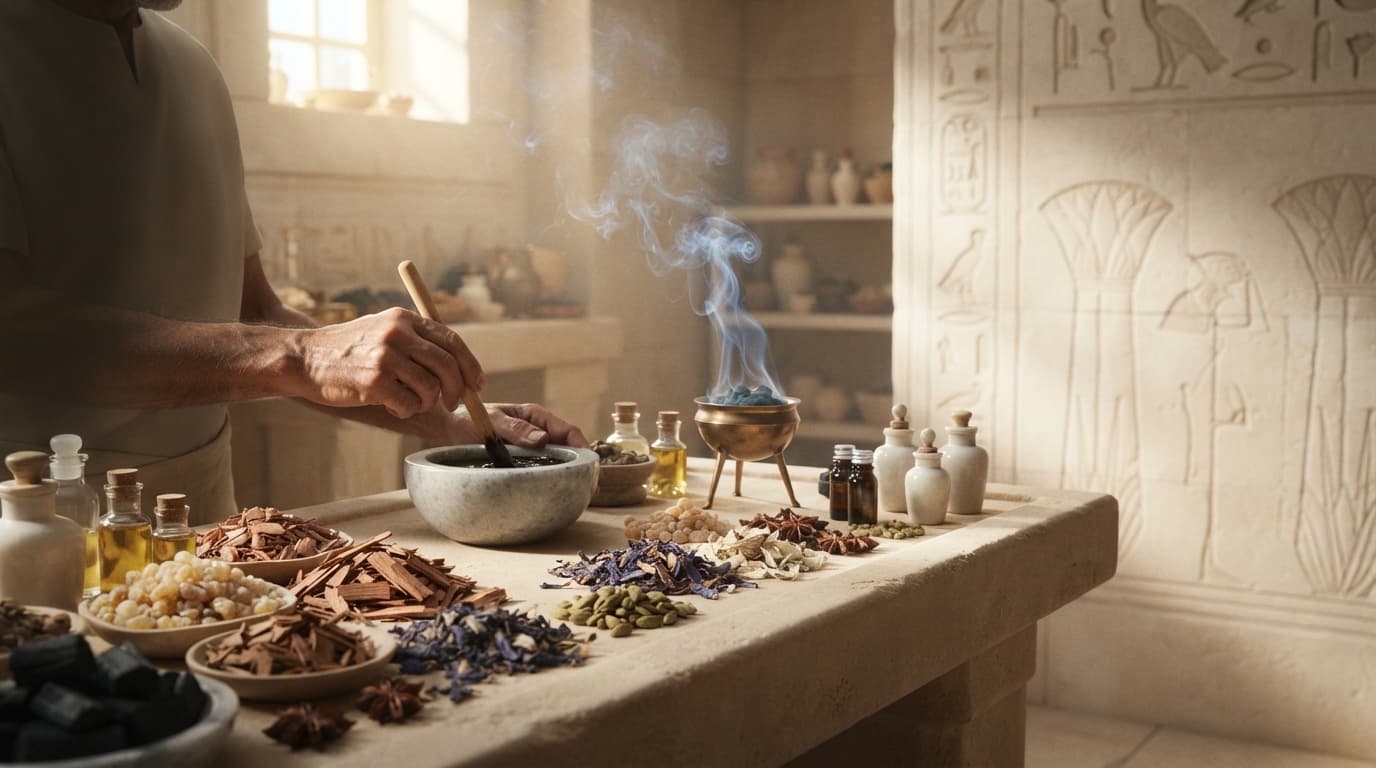
How a civilization 5,000 years old developed perfume formulas so sophisticated that modern chemists still struggle to fully replicate them.
A journey through the agarwood forests of Laos and Cambodia, where the world's most precious aromatic wood is harvested with extraordinary care.
With the help of Egyptologist Dr. Amira Soltan, we decode the scent formulas carved into the walls of the Temple of Edfu.