Craftsmanship
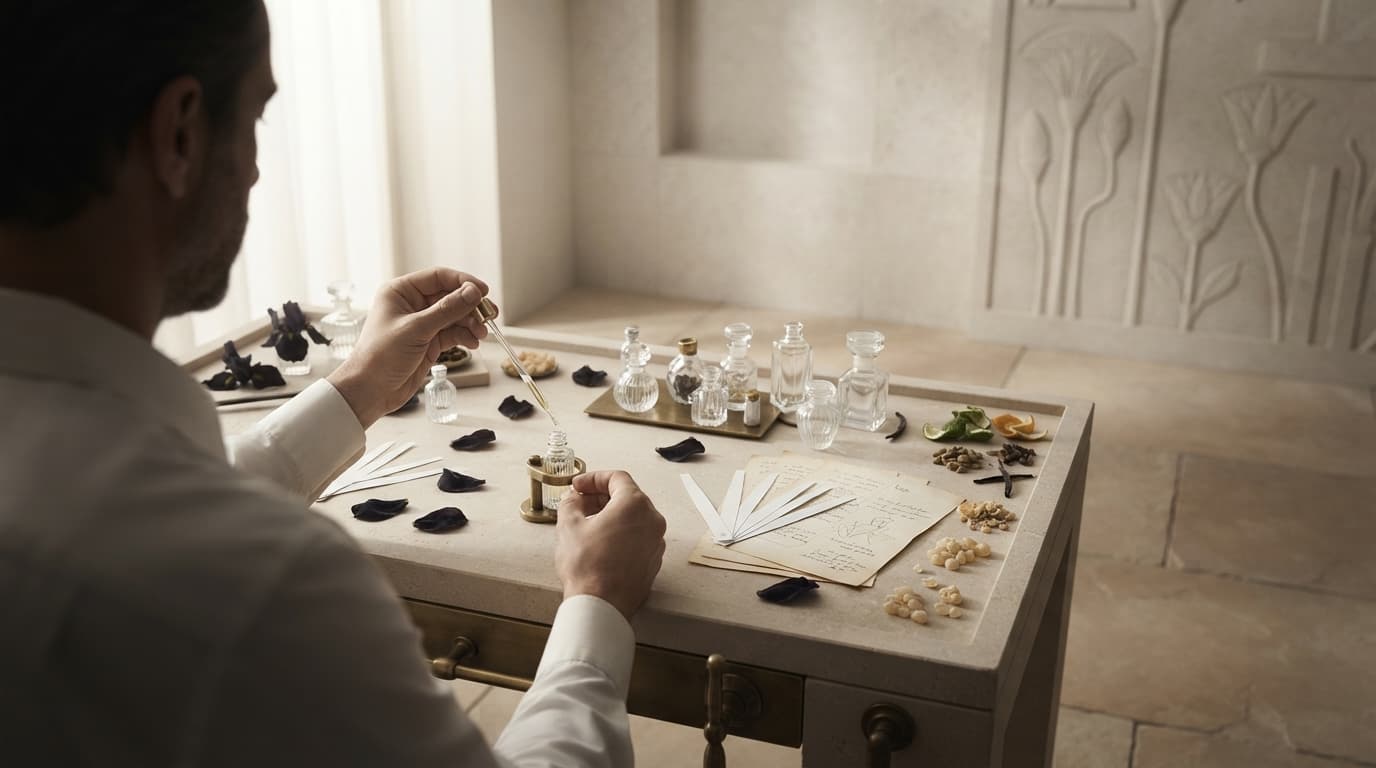
Master perfumer Mohamed Hassaan opens the doors of the KHEM atelier to share how our most complex fragrance took three years and 200 iterations to perfect.
The formula sheet for Onyx Night runs to four pages. The version we sell is numbered 214. Between the first trial and that one lies three years, several hundred blotters, and one decision made eighteen months in to throw out the entire structure and begin again.
The brief was a single sentence, and it was written before any material was weighed: the smell of a temple after the fire has gone out.
That is not a list of notes. It is a set of conditions. Something has burned and stopped burning. There is resin in the stone, smoke in the air but no flame, cold coming in, and a residue of something sweet that was there before the fire and outlasted it. Every trial for three years was assessed against that sentence and nothing else.
The early trials were built the obvious way: incense accord on top, resins in the heart, woods and animalic materials in the base. Frankincense, black pepper, labdanum, oud, vanilla. They smelled expensive. Several were, by any ordinary standard, good.
They were also wrong, and it took a long time to name why. A conventional pyramid announces itself in the correct order: bright, then warm, then deep. But a room after a fire does not arrive in that order. The smoke is already old when you walk in. The sweetness is underneath from the first second, not a reward for waiting.
We were composing a fragrance about the fire. The brief was about the silence afterwards.
Trial 96 was the last of that generation. We stopped, cleared the bench, and started from the base.
The second structure was assembled in reverse: base first, and nothing added above it until the base could stand alone for eight hours on skin and remain interesting.
That base took four months. It is built on aged Laotian oud at a low concentration, labdanum absolute, a small quantity of birch tar for the cold ash quality, and benzoin for the sweetness that has to be present from the beginning. Getting the birch tar right consumed most of that time; a fraction of a percent too much and the whole thing smells like a fireplace, which is a completely different and much less interesting idea.
Only then came the heart: Egyptian jasmine absolute, saffron, and a rose that had to be dark enough not to brighten the composition. And the top, which is deliberately quiet: pink pepper and a trace of elemi, present mostly to keep the first ten minutes from feeling abrupt.
Most of the numbered trials differ from their predecessor by one material at one concentration. Trials 141 through 158 are the same formula with the saffron moving in increments between 0.4% and 1.1%. Fourteen of those eighteen are indistinguishable to almost everyone. Two of them are not, and one of them is in the bottle.
This is the part of the work that photographs badly and matters most. A perfume is not discovered in a moment of inspiration. It is converged upon, slowly, by someone willing to smell the same thing forty times and be honest about the differences.
Trial 214 was not obviously final. Trials 215 through 219 exist; they are marginally different and none is better. What made 214 the one was a test we run on everything: the composition is worn for a full day by someone who was not in the room while it was made, and at the end of the day they are asked what it reminded them of.
The answer we were waiting for, for three years, was: somewhere I've been before.
Continue Reading
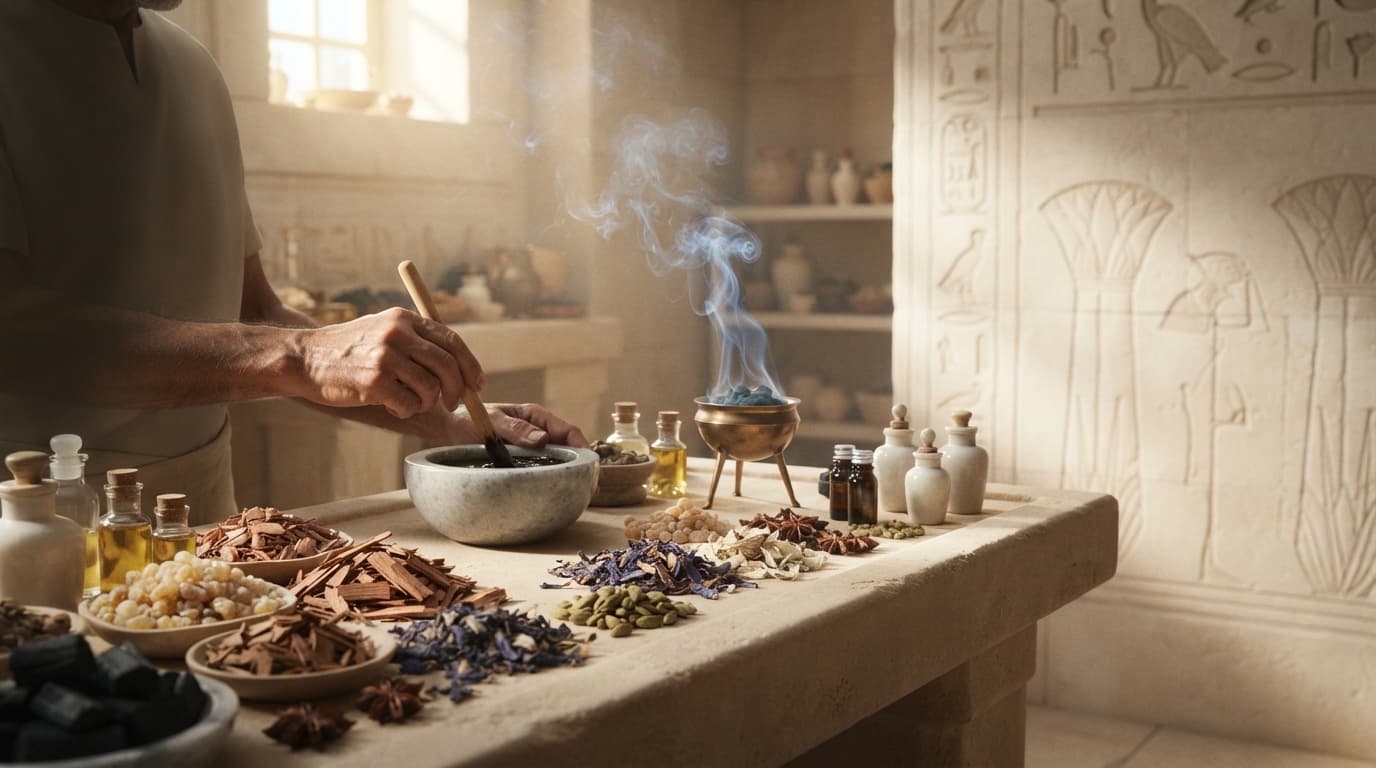
How a civilization 5,000 years old developed perfume formulas so sophisticated that modern chemists still struggle to fully replicate them.
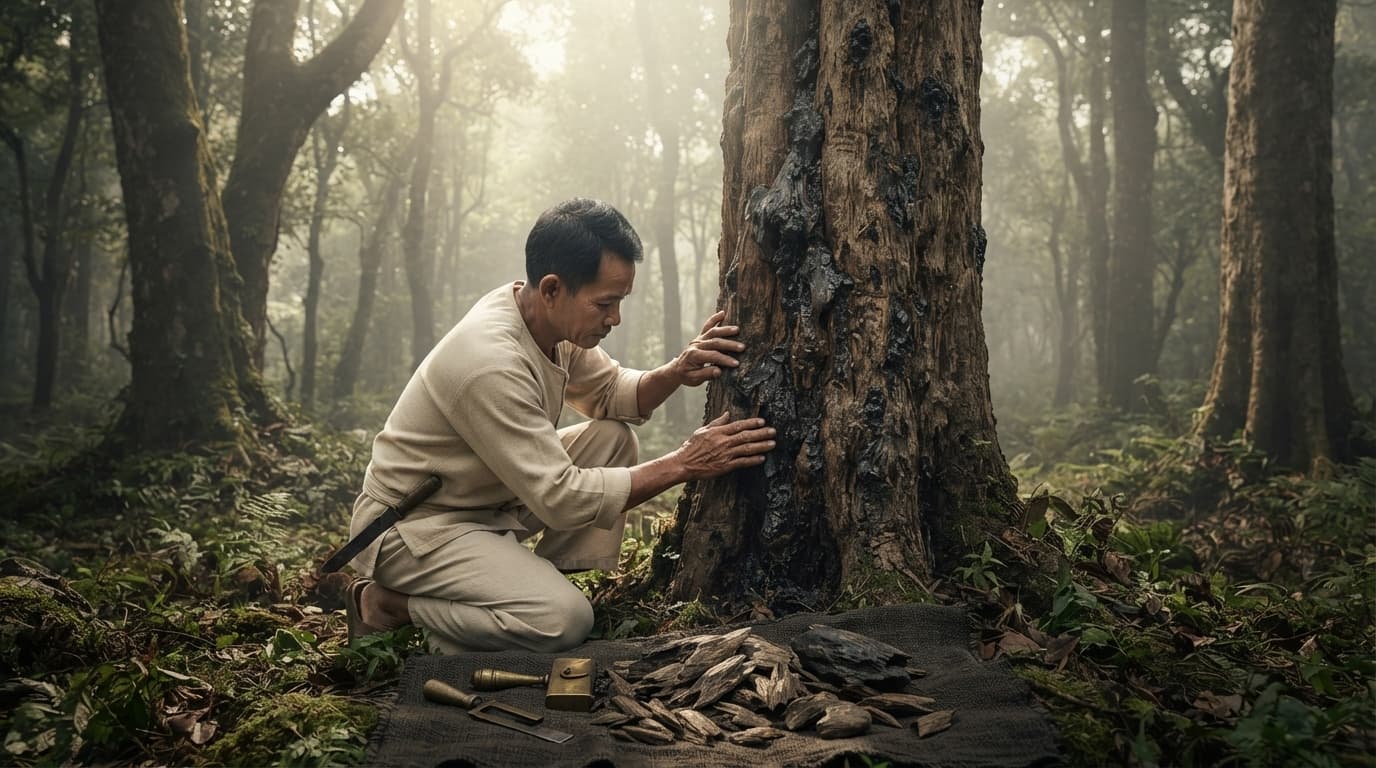
A journey through the agarwood forests of Laos and Cambodia, where the world's most precious aromatic wood is harvested with extraordinary care.
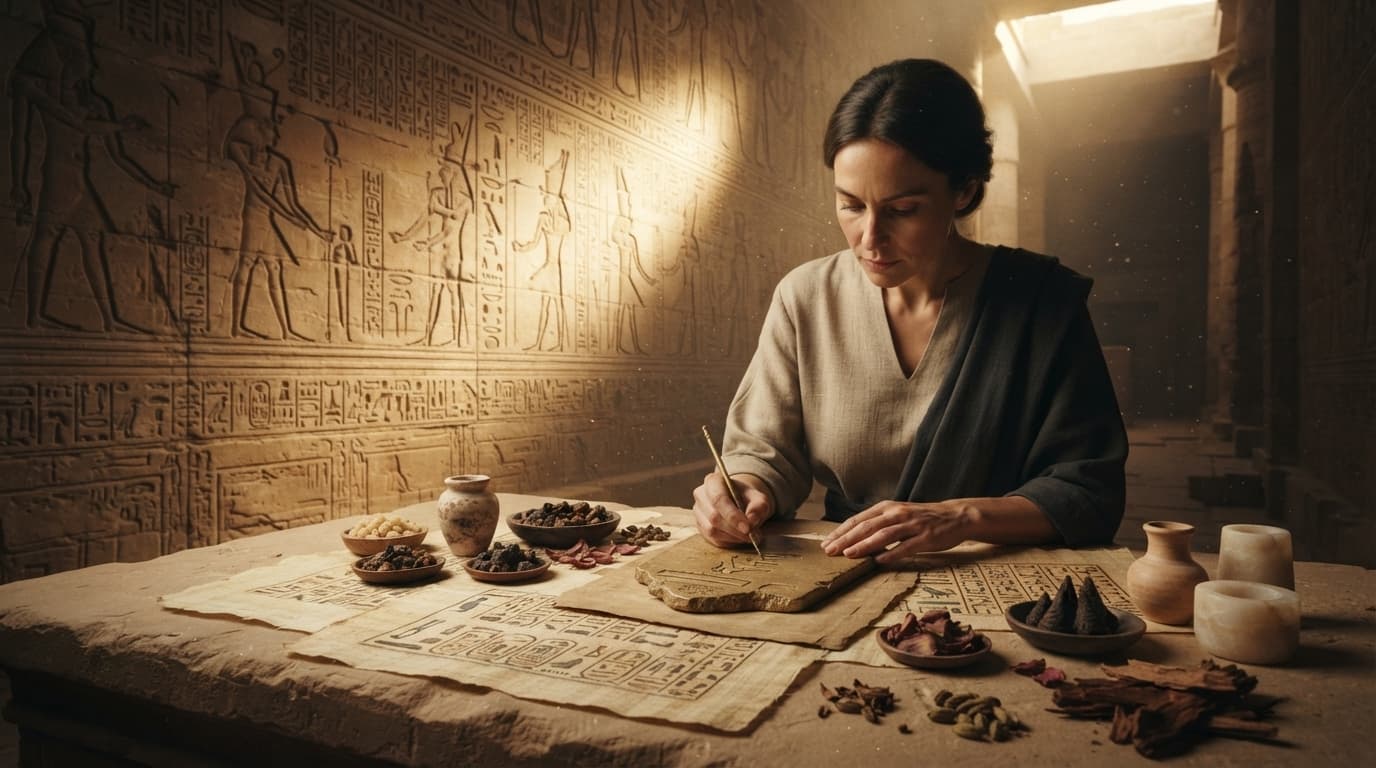
With the help of Egyptologist Dr. Amira Soltan, we decode the scent formulas carved into the walls of the Temple of Edfu.