Ingredients
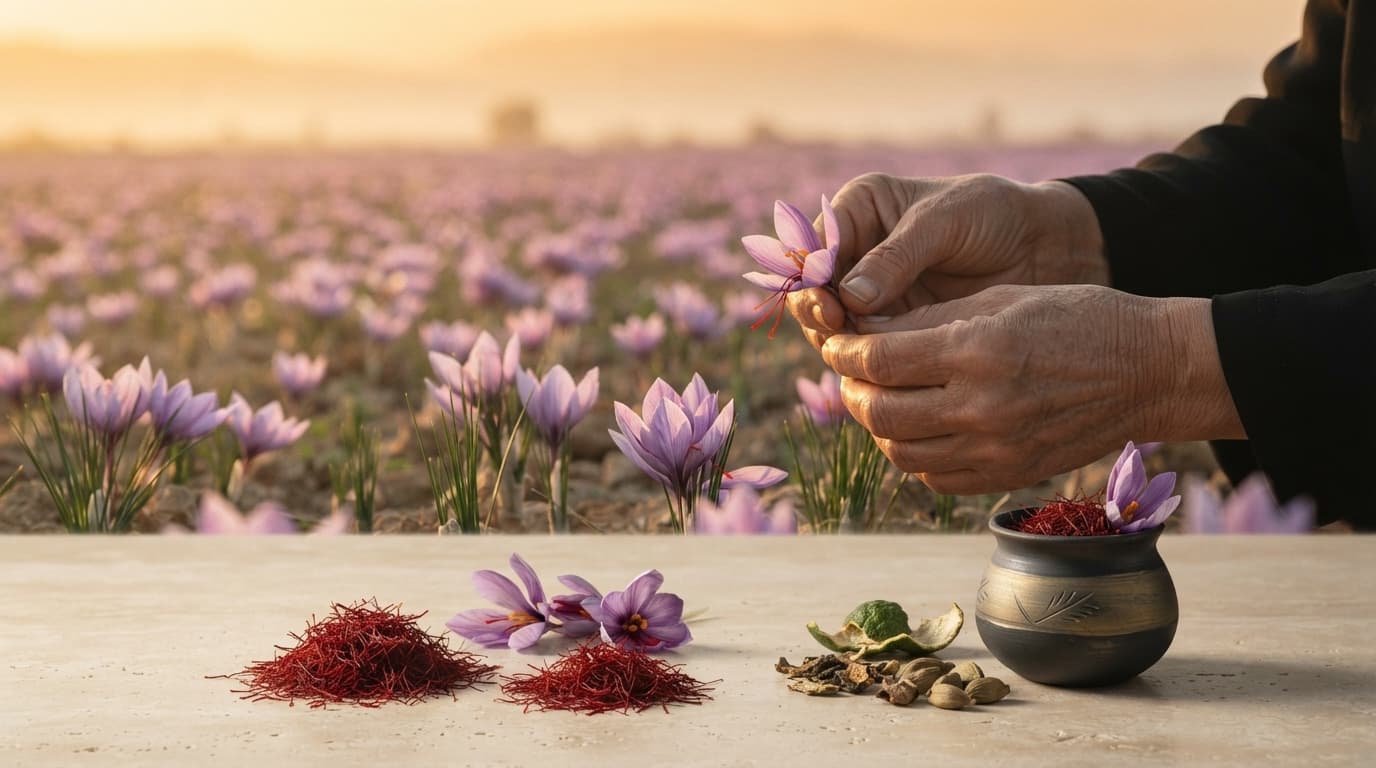
A gram of saffron requires 150 flowers, each hand-harvested at dawn. We trace the journey of this extraordinary ingredient from the Iranian plateau to our atelier.
Crocus sativus flowers for two weeks a year. It opens before dawn, and it must be picked before the sun is high enough to wilt the stigmas, so the harvest happens in the dark, by hand, by people who will bend to the ground several thousand times before breakfast.
Each flower yields three crimson threads. A single gram of dried saffron requires roughly a hundred and fifty of them. A kilogram requires a field.
We buy from the Khorasan plateau in north-eastern Iran, which produces the overwhelming majority of the world's saffron and has done for as long as the trade has been recorded. The reasons are climatic and unromantic: hot, dry summers; cold winters; and a soil that drains fast enough to keep the corms from rotting.
The grade that matters is sargol, pure red stigma, with the pale style cut away entirely. Cheaper grades leave the style attached because it adds weight and costs nothing to produce; it also contributes no aroma and no colour, which is precisely why it is left on.
Saffron is among the most adulterated substances in the world. Safflower, turmeric, dyed corn silk, and threads of the plant's own worthless style are all sold as the real material.
We buy by lab report and by nose, in that order, and we have rejected more lots than we have bought.
What confuses people new to saffron is that the kitchen version and the perfumer's version behave nothing alike.
In food, saffron is used at a few threads per dish, infused in warm liquid, and reads as honeyed, floral, faintly metallic. In perfumery it is used as an absolute or a tincture at fractions of a per cent, and at that concentration the dominant impression is leather dry, slightly bitter, with a hay-like warmth underneath and an almost medicinal edge at the top.
The molecule responsible for most of the aroma is safranal. It is unstable in light and heat, which is why saffron is stored in the dark and why old saffron smells like nothing much at all.
Saffron is unforgiving of overdose in a way that few materials are. Below its threshold it does something no other ingredient does: it gives a composition a dry, glowing warmth that reads as expensive without being identifiable. Above that threshold it becomes conspicuous, medicinal, and slightly harsh, and it drags everything around it toward the same register.
The working range in most of our compositions is between four and eight parts in ten thousand. In Onyx Night, eighteen consecutive trials were spent finding the point in that range where the saffron stopped being a note and became a quality of light.
Saffron in Egyptian perfumery is not a modern flourish. It appears in temple formulas, in medical papyri, and in the residues recovered from sealed vessels. It travelled, expensively, from the same eastern trade routes that brought cinnamon-like barks and precious woods, and it was used in the same way we use it now: sparingly, low in the structure, to give resin and wood a warmth they cannot generate on their own.
The harvest still happens at four in the morning, by hand, exactly as it did then. Some parts of this craft have not been improved upon because they cannot be.
Continue Reading
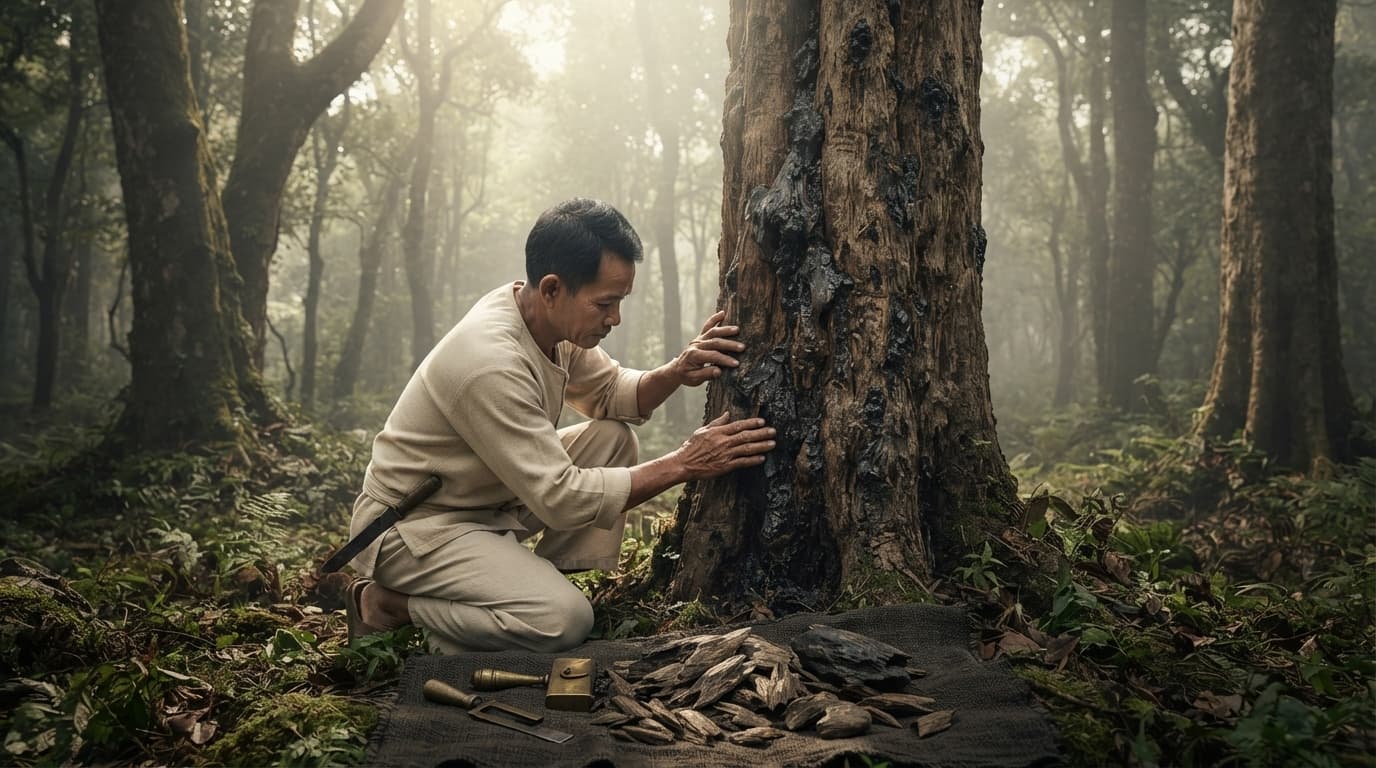
A journey through the agarwood forests of Laos and Cambodia, where the world's most precious aromatic wood is harvested with extraordinary care.
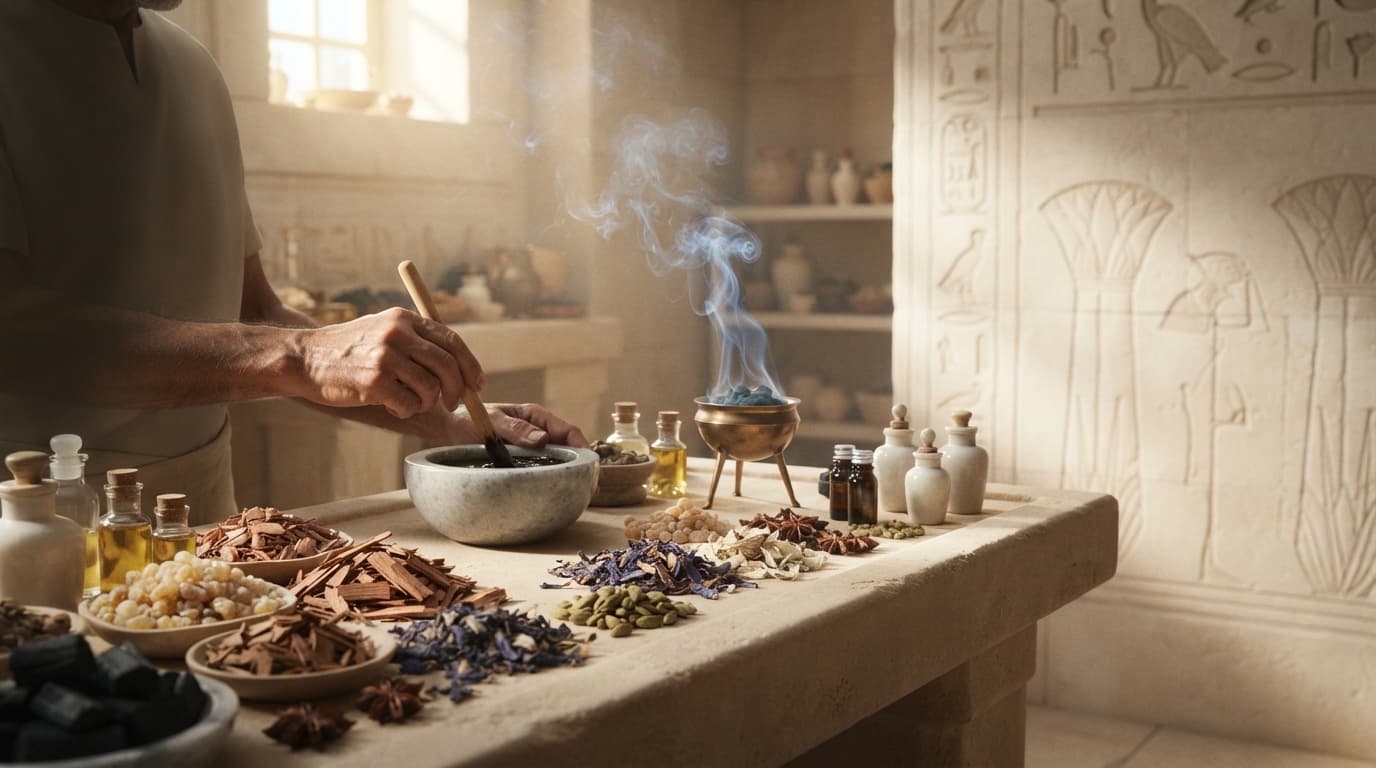
How a civilization 5,000 years old developed perfume formulas so sophisticated that modern chemists still struggle to fully replicate them.
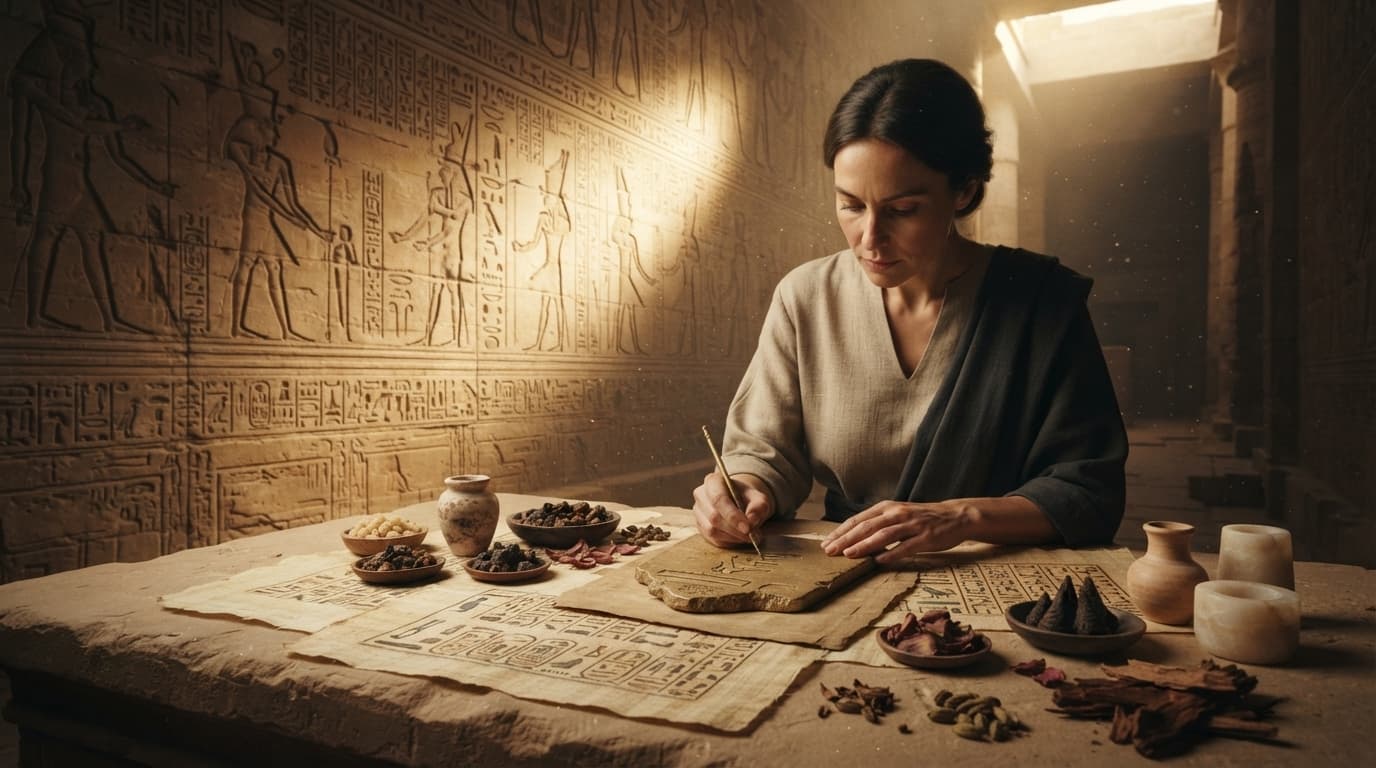
With the help of Egyptologist Dr. Amira Soltan, we decode the scent formulas carved into the walls of the Temple of Edfu.